%20(1).png)


An Invitation to Join Us @ Execution Intervention Project


How Moral Failure Forms
We tend to think of moral failure as something explosive and obvious...a headline event, a singular action that can be pointed to, condemned and punished. This way of thinking is comforting because it lets us believe that wrongdoing is rare and easily identifiable. But this comfort is a story we have been telling ourselves for so long we have mistaken it for truth and we can no longer afford it.
Most harm does not erupt out of nowhere. It forms slowly. It gathers in the unnoticed corners of the mind...in habits of speech, in repeated justifications, in the subtle and calculated ways we decide who deserves empathy and who does not. It lives in the silences we choose, in the policies we fail to question, in the language we receive without examination and pass along without thinking.
Long before any visible act occurs, an interior permission has already been granted. The imagination has already made room for outcomes we once would have recoiled from. What eventually becomes policy or punishment often began as a quiet accommodation of resentment, fear or moral distance. By the time we witness the action, the attitude that made it possible has been living in us for years.
We must name this clearly: moral failure is not a moment. It is a slow accumulation. Every one of us participates in that accumulation whenever we remain silent, whenever we avert our eyes, whenever we persuade ourselves that what is happening to someone else belongs to some other category of concern than our own.
The death penalty lays this process bare with a precision nothing else quite matches.
Capital punishment is often described as a tool of justice...a legal mechanism reserved for the most severe crimes. But that description is doing a great deal of work to conceal something far more dangerous. Beyond its statutes and procedures, the death penalty functions as a cultural declaration about what a society is willing to authorize in the name of order. It does not only end a life. It marks a threshold...the precise point at which a community decides that killing, under certain conditions, can be lifted out of the category of transgression and placed into the category of duty.
That crossing does not happen overnight. It is constructed through years of rhetoric that crowns retribution above restoration, through language that converts human beings into administrative categories, through public narratives that reframe execution as grim necessity rather than preventable tragedy. We rehearse these arguments until they wear the face of common sense. We amplify these fears until they carry the authority of fact. And with each rehearsal, something essential is quietly filed away.
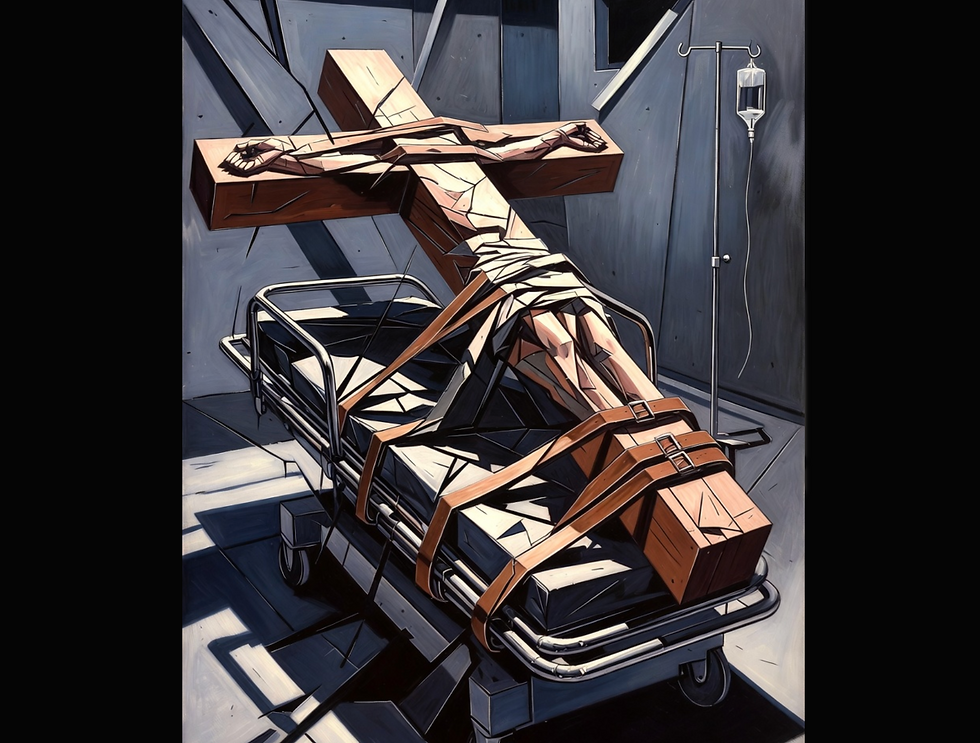
An execution chamber is not simply constructed of steel, glass and protocol. It is constructed of conclusions reached long before anyone entered the room...of dread stretched until it became certainty...of collective exhaustion that chose the finality of death over the difficulty of transformation. Every scheduled execution is the last in a long sequence of smaller permissions: anger that went unchallenged, distance that was quietly celebrated and empathy that was surgically narrowed until it could no longer reach the person in the cell.
The act you see is only the last step. Which means the place to intervene is never the last step. And that is exactly where we are asking you to come stand with us.
What Witness Teaches
I know this not as argument. I have witnessed the state kill eleven of my friends.
Eleven. I want you to sit with that number and refuse to let it become abstract. Not eleven cases. Not eleven sentences. Eleven human beings whose voices I knew, whose fears I had heard in the weeks before, whose hands I had held. I arrived each time carrying the same questions...about justice, about what dignity requires, about the stories we construct to make such a thing feel permissible. Each time, I walked out carrying something I had not brought in. Not resolution. Weight. The specific, non-transferable weight that settles into a person who has watched the state extinguish a human life and then been asked to return to ordinary living.
That weight does not leave. But it does something useful. It clarifies. And what it has clarified for me, over eleven executions and the years of organizing that surrounded them, is that no one should have to carry this weight alone. That is why we are asking you to join us.
Anyone who has watched an execution date move from abstract future to imminent present knows how suddenly the language of policy becomes the language of a person. The courtroom arguments about deterrence and proportionality and procedural integrity...those belong to another world. In the room where it actually happens, what you are confronted with is simply a human being. Breathing. Afraid. Present. And then absent. The arguments do not follow you out. The absence does.
One of the most consequential shifts in any culture that accepts capital punishment is the drift from moral principle to procedural management. The original question...whether the taking of a life can ever be justified...gives way, once the answer becomes sometimes, to an entirely different set of questions: which methods, which timelines, which eligibility criteria, which appeals have been exhausted. The boundary that once felt absolute becomes a filing system. What was a reckoning becomes a checklist.
Language does this work quietly and efficiently. We learn to say carrying out a sentence instead of killing a person. Administering justice instead of ending a life. Providing closure instead of making a family watch. The vocabulary of institutional process moves in and the vocabulary of mortality is shown the door. Something catastrophic is administered into sounding routine.
Once that linguistic shift takes hold, human worth begins to be measured through criteria rather than conscience. The question stops being whether a life is sacred and becomes whether the procedures were followed. That is not a legal refinement. That is a moral abdication dressed in the clothes of competence.
I have stood in those spaces. I have felt what it costs to be present for something that everyone around you has agreed to treat as procedure. And I am telling you directly: we cannot normalize this. The moment we do, we have already lost something we will spend generations trying to recover. We are determined not to let that happen. We need you to be determined alongside us.
What the Death Penalty Does to a Culture
The recalibration does not stay where we put it. Once a culture grows comfortable with the idea that a life can be formally evaluated and ruled expendable, that comfort migrates. It surfaces in how poverty gets narrated...as individual collapse rather than structural design. It shapes how immigration gets debated...as invasion rather than movement of human beings with human reasons. It underwrites the expansion of incarceration without demanding justification. It determines whose suffering gets funded with public empathy and whose gets filed under personal responsibility.
Capital punishment did not produce all of these attitudes on its own. But it ratifies them. It gives official form to the intuition that some people exist beyond the boundary of our obligation...that redemption is a resource to be allocated based on merit...that the circle of our concern has a perimeter and certain people have placed themselves permanently outside it. Every execution rehearses that intuition. Every rehearsal makes it harder to challenge. That is why this fight belongs to all of us and why we are asking all of you to enter it.
Those who defend the death penalty speak of justice, public safety and deterrence. Those who oppose it speak of human dignity, the certainty of error and the irreversibility of the punishment. Both sides are having a real argument. But underneath that argument is a question neither side states plainly: what habits of feeling is a society choosing to exercise? What does it do to us...not to the condemned, not to the victims' families, but to the rest of us...to repeatedly perform the ritual of deciding that a life has been forfeited?
A culture that rehearses that ritual...however rarely, however carefully administered, however surrounded by due process...trains itself. The shock that once arrived with the idea of the state killing a person diminishes with each repetition. What required justification becomes accepted. What was accepted becomes expected. What is expected stops being seen at all.
We cannot allow the unseeable to win. And we cannot fight it alone.
Laws are not neutral instruments. They are teachers. They declare which impulses deserve institutional support and which deserve suppression. They communicate which fears are legitimate and which are to be resisted. When a government reserves the formal authority to kill its own citizens, it broadcasts something that travels well beyond the walls of any execution facility: that there are conditions under which elimination is resolution...that destruction, properly licensed, can pass for justice...that ending a life is an acceptable answer to the question of what we do with people we do not know how to hold.
We refuse that answer. We are building a community of people who refuse it with us. We are asking you to be one of them.
The Urgency of This Moment
This letter is not being written from inside an abstraction. Executions are being scheduled while you read this. People are in cells right now counting days. Families are near phones they are afraid to answer. The calendar is not waiting for us to finish our deliberations.
There is nothing slow about this emergency. Each execution date that arrives without organized resistance represents not only a legal outcome but a communal failure...a failure of the people who could have intervened and chose, for any number of understandable reasons, not to. We do not want that failure to belong to you. That is why we are reaching out.
We understand the pull toward inaction because we have felt it ourselves. It is genuinely easier to believe these events occur in a separate world...one populated by crimes too horrific to require our emotional involvement, managed by a system with enough lawyers and appeals and oversight to handle itself. We have rehearsed that belief. It is warm and it is false.
We have been in those rooms. We have sat with people in the weeks before their scheduled deaths and then we have watched those deaths occur. What those experiences burned into us is this: institutions do not rescue people from institutions. Communities do. Awake, committed, morally present human beings who have decided that looking away is no longer something they are willing to do...those are the force that stands between a date on a calendar and a life that continues. We are building that force and we want you inside it.
The question is not whether justice matters to you in principle. Principles are easy. The question is whether your commitment to justice is durable enough to inconvenience you...to claim your time, your voice, your willingness to remain present inside someone else's suffering when every social signal is telling you it is acceptable to look elsewhere.
We are writing to you because we believe the answer is yes. We are asking you to prove it alongside us.
What Resisting the Death Penalty Requires
Opposing capital punishment is not simply a policy position or a legal cause. It is an ongoing, uncomfortable examination of the interior conditions that make such a punishment feel reasonable to so many people. It requires honest confrontation with what we want when we want justice...with how much of that wanting is about accountability and how much is about the satisfaction of destruction. We do not take on this examination alone. We do it together.
Does justice require that something be destroyed? Or can genuine accountability exist without extinguishing the life of the person being held responsible? Can a society look directly at terrible acts and respond with something other than a terrible act of its own? These questions do not have easy answers. They are the questions we carry into every conversation, every courtroom, every execution date we try to interrupt. We carry them better when we carry them in community.
But resisting the death penalty cannot stop at the death penalty. The logic that authorizes execution...that some lives are past saving, that certain people have forfeited their place within our concern, that efficiency of removal is an acceptable measure of justice...that logic is not contained in execution chambers. It operates in the policies that determine who receives healthcare and who is left to manage without it. It lives in housing decisions and addiction treatment funding and the language used to discuss mental illness. To oppose capital punishment with integrity is to oppose the entire moral structure that makes it feel like a reasonable tool. We are opposing that structure together and we need more people willing to oppose it with us.
This fight is larger than any single scheduled date. It is a contest over what kind of society we are building...over whether transformation remains a category we are willing to invest in or whether we have quietly decided that some people and some situations are simply past it. It is a fight for the right to insist, in the face of enormous institutional pressure, that no human being is categorically beyond the reach of our concern.
That insistence does not sustain itself. It requires people willing to return to it when the news is bad and the progress is slow and the opposition is vast and the work asks more than it seems anyone should have to give.
We are asking you to be among them. Not as a subscriber. Not as a supporter from a comfortable distance. As a full participant in this work.
Why I Founded the Execution Intervention Project
Eleven executions have not made me harder. They have made me clearer. Each one stripped away another layer of abstraction until what I was left standing in front of was simply this: a person, a room and a verdict that the surrounding society had rendered long before anyone entered that room. The question I left each facility carrying was not whether the legal process had been followed. It was whether enough people had been paying attention early enough and loudly enough and with enough stubbornness to change what the process concluded.
Each time, I believed more firmly: there is work to do and it cannot wait for conditions to improve. And I believed more firmly each time that no one person can do it. It requires a community willing to show up together.
The Execution Intervention Project exists because I was no longer willing to accept that witness was the only available role. I had witnessed eleven times. Eleven times I had walked back into ordinary life carrying the specific weight of what might have been different if the resistance had been larger, earlier, more sustained. I founded this organization to build the infrastructure that makes that resistance possible...and to find the people willing to inhabit it.
Our purpose is direct: to provide tangible spiritual and organizational resources to interrupt scheduled executions. We hold that every execution date is not merely a legal proceeding...it is a moment of moral reckoning. A moment when the state moves toward an irreversible conclusion and every person with a conscience faces a choice about whether they will be a witness or a participant in the effort to stop it. We are asking you to choose participation.
Intervention is not one thing. It is spiritual accompaniment...sitting with someone who is facing death so that they do not face it alone. It is physical presence at the gates...bodies gathered, names spoken aloud, lives made visible to a process that depends on their invisibility. It is relentless advocacy...phone calls, written testimony, direct confrontation of the officials who treat scheduled deaths as administrative tasks. And it is the simpler, harder thing underneath all of those: the refusal to look away when the gravity of the situation makes looking away feel almost justified. Every one of these forms of resistance is more powerful when more people commit to it.
None of this is sustainable in isolation. This work requires a community...people who stay informed when ignorance would be more comfortable, who respond when urgency surfaces and hesitation would be easier, who are willing to keep cultivating a different vision of justice...one that does not require death to feel complete. We are building that community. We want you in it.
Come Join Us
We are not asking you to observe from a distance. We are asking you to step into this work alongside the people already doing it...to become part of a community that shows up when it is hard, stays engaged when progress is slow and refuses to grant the system the silence it depends on.
The system of capital punishment runs on distance. It requires the condemned to remain abstract enough that their deaths do not disturb the general order of things. It needs their crimes to loom large enough that empathy for them reads as betrayal. It depends on their lives remaining unknown to the people who might otherwise object to their ending. Distance is not incidental to how this system functions. Distance is the system. And the most direct way to dismantle it is to close the distance...to know the names, learn the histories and insist on the full humanity of every person inside it.
That is what we do together. When an execution date is set, we respond together. When someone needs accompaniment in their final weeks, we provide it together. When legislators need to hear from constituents who refuse to accept scheduled death as ordinary governance, we make that noise together. When the public needs to see that these deaths are not happening in the dark with no one watching, we stand at those gates together.
Joining us means different things depending on where you are and what you are able to give. It might mean showing up physically when executions are near. It might mean making calls and writing letters during the weeks and days before a scheduled date. It might mean accompanying someone spiritually through the unbearable work of facing death. It might mean using your platform, your network or your relationships to pull more people into this community. It might mean signing up for our mailing list so you receive execution updates, action alerts and reflections on this work as they become available. Whatever form your participation takes, it matters. The work is large enough to hold all of it.
That is where transformation begins: not in a legislature, not in a courtroom, but in the moment when ordinary people decide they are no longer willing to remain comfortable inside a system that kills in their name...and then find each other and begin.
Another Atmosphere Is Possible
The structures a society builds reveal the convictions it has quietly normalized. Capital punishment is not an anomaly in American life. It is a reflection of a moral atmosphere...one that has gradually learned to receive elimination as a form of resolution, to process finality as a kind of justice and to accept killing, when properly credentialed, as an answer.
A different atmosphere is not a fantasy. We have been inside it. We have sat in rooms where the family members of people who were murdered and the family members of people on death row found each other across what should have been an uncrossable distance and discovered that grief, in its deepest form, does not sort people the way the system does. We have seen communities that abolished the death penalty and did not become more dangerous...they became more honest about what safety actually requires. We have felt the particular quality of presence that exists among people who have decided together that no life in their community will be treated as disposable. That atmosphere is real. It is built. And it is built by people like the ones we are asking you to join.
That atmosphere does not arrive through legislation alone, though legislation matters and we fight for it. It does not descend from judicial reform alone, though courts matter and we engage them. It is built by ordinary people...people with no special authority, no institutional platform, no certainty that what they are doing will be enough...who decide that every human life is worth the difficulty of defending. Not only the lives that are easy to defend. Not only the ones that generate sympathy. Every one.
We know how radical that sounds. We are asking you to hold it anyway...and to hold it with us.
The dates are being set. The people counting days in those cells are wondering whether anyone outside the walls has decided their life is worth the trouble of fighting for.
We have decided. Now we are asking you to decide. Come be part of this. Come stand with us. Come do the work that the moment requires.
The Rev. Dr. Jeff Hood
Founder, Execution Intervention Project
P.S. If you are ready to stay connected to this work...to receive execution updates, action alerts and ongoing reflections as they become available...join our mailing list @ https://www.executionintervention.org/ The work is already underway. Come be part of it.


Comments