%20(1).png)


The Day After Easter: Facing the Machinery of Death

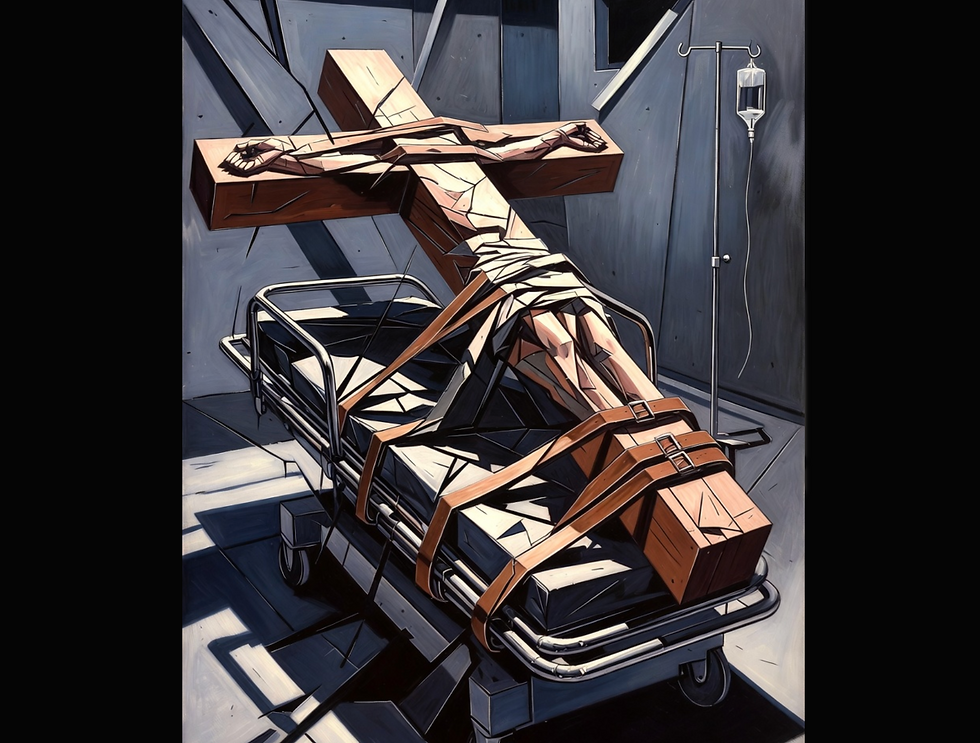
Easter has come and gone. The hymns have been sung. The sanctuaries have emptied. The language of resurrection has been spoken aloud confidently as if it has settled something final about the world. But the system of executions continues. It does not pause for holidays or reflection. It moves quietly efficiently on its own schedule. The machinery of death does not observe calendars...and that should disturb us far more than it does.
Whatever we claim to believe about resurrection we continue to participate in systems that make death deliberate procedural and justified. We have not abandoned execution...we have perfected it. We like to imagine that we are far removed from the violence of the past that whatever happened on a hill outside Jerusalem belongs to another time another people another moral universe. It does not. Execution has always depended on the same structure: a human being rendered powerless a system that declares their death necessary and a group of individuals willing to carry it out while convincing themselves it is something other than killing. The forms change...the logic does not.
We no longer lift bodies onto wooden beams outside city gates. We strap them to tables behind reinforced walls. We replace nails with needles, crowds with witnesses and spectacle with controlled silence. We call it humane. We call it justice. We call it closure. But beneath the language the reality is unchanged. A human being is held down. A process begins that cannot be stopped. The body resists. And then the body dies. There is nothing abstract about it. Nothing symbolic. Nothing safe. It is physical. It is violent. It is final. And it is done in our name.
This is the part we work hardest to avoid. We speak about the death penalty as if it were a policy question a legal framework a matter for courts and legislatures. But the reality of it is much closer much more intimate and much more disturbing. It requires participation. Not everyone straps the body down. Not everyone administers the drugs. But the system is held together by a network of consent...by voters taxpayers officials and citizens who allow it to continue. The distance we place between ourselves and the act does not absolve us. It only makes it easier to live with.
Every system of execution believes it is justified. That is the real danger. Not that people suddenly become cruel or bloodthirsty but that they become convinced: convinced that this death is necessary, convinced that this case is different, convinced that the system however flawed is ultimately just. Once that conviction takes hold the machinery runs smoothly. The officials follow protocol. The witnesses observe. Statements are released. And most of the rest of us never see it.
There is a particular silence that follows an execution. It is not the silence of peace. It is the silence of completion...the sense that something has been resolved that a process has reached its conclusion. But nothing essential has been resolved. The violence remains. The questions remain. The moral cost remains. What disappears is not the problem but the person. And we accept that disappearance as an acceptable outcome.
If resurrection means anything...if it is more than a story we tell once a year...then it stands as a refusal to accept death as the final word. Not just death in the abstract but death enacted administered and justified by human systems. And yet we continue to build those systems. We continue to refine them. We continue to defend them. There are execution dates already set. There are individuals waiting in cells counting down not to an uncertain end but to a scheduled one. The exact hour is known. The procedure is prepared. The outcome is guaranteed.
This is not something that happens in the past. It is happening now. Most of us will not see it. We will be asleep or occupied or simply uninterested. Life will proceed as it always does. Coffee will be made. Emails will be sent. Conversations will take place without any reference to what occurs behind reinforced walls out of sight. But absence of attention is not absence of participation. The question is not whether we are involved. The question is whether we are willing to acknowledge that we are.
Once that acknowledgment is made the moral distance collapses. The execution is no longer something done by them somewhere else. It becomes something done by us here within a system we sustain. That is far more difficult to live with. It is easier to keep the language clean. To speak of justice and law and necessity. To trust that the process however imperfect leads to the right outcome. It is harder to sit with the reality: that a person is being killed deliberately by a system we have chosen not to dismantle.
Systems are built which means they can be dismantled. But dismantling requires more than discomfort. It requires a break...a refusal to continue participating in something simply because it has always been there. That is the decision in front of us not in theory not in abstraction but in the reality of what is being done right now in our name. The executions continue. The only question is whether we will participate in them any longer.


Comments